Nov 28, 2026 - Musings    No Comments

What Should My Children Do? A Human’s Guide to the Age of AI
Daniel Susskind · Bullet-point summary

  • Central argument. Prepare young people to thrive across several possible futures. Susskind sees three priorities for education in the AI age: strengthen foundational skills, teach students to work effectively with AI, and develop the character and judgment they will need to decide what to do with those capabilities. 

1. The limits of “future-proof” career advice

  • Predictions about safe skills can age quickly. Susskind opens with England’s decision to make coding part of the national curriculum. Programming looked like a strong bet for a world increasingly dependent on software. Within a decade, generative AI could write code itself. The example shows how quickly the value of particular tasks within a field can change. 
  • Think about what people do within a job. A profession combines many activities. In law, for example, AI may take on more preliminary document review while lawyers continue to exercise judgment about a client’s needs and how to present a case. A familiar job title can survive even as the day-to-day work and the way newcomers learn it change substantially. 
  • Build the capacity to learn again. Susskind argues that adults will need opportunities to retrain throughout their working lives. For a young person, knowing how to learn an unfamiliar subject, seek feedback, and revise an approach can be as consequential as the first qualification they earn. 

2. Reading, mathematics, and critical thinking still matter

  • Foundational skills make further learning possible. Reading closely helps students understand difficult ideas. Numeracy helps them interpret quantities and check whether an answer makes sense. Critical thinking helps them weigh evidence and recognize weak reasoning. All three remain useful across subjects and careers. 
  • Independent knowledge gives students a way to check AI. An AI system can give a polished explanation with a wrong calculation, a fabricated detail, or a faulty assumption. A student who understands the material can ask a better follow-up question, consult the original source, or recognize when the answer needs to be redone. 
  • The learning happens partly in the work itself. Reading a challenging passage, reasoning through a problem, and revising a rough draft give students practice they can draw on later. If a tool performs those steps every time, the student can come away with a finished assignment and too little practice in the skill the assignment was designed to teach. 

3. “Teach both, test both”
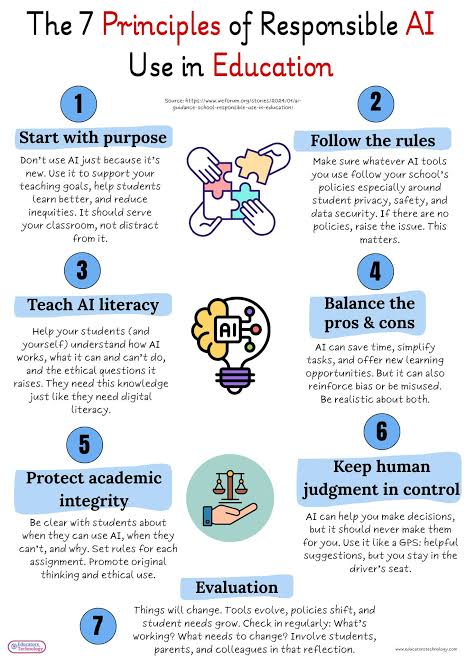
  • Teach and assess students both with and without AI. Susskind draws on the example of calculators in mathematics education. Students can practice arithmetic independently and also learn to use calculators for more demanding problems. He proposes applying the same principle across subjects, including history, English, music, and art. 
  • Give each kind of assessment a clear purpose. An unaided task can show whether a student understands a concept and can explain it. An AI-assisted task can show whether the student can frame a question, evaluate the response, correct errors, and use the tool to tackle something more ambitious. In both cases, the teacher needs evidence of what the student can actually do. 
  • Use AI to extend what a student can explore. Susskind describes a parent and daughter who used AI to plot the characters’ journeys in Dracula on an interactive historical map. The tool helped the student connect the novel to geography and pursue a question that came from her reading. 
  • Personalized tutoring is one promising application. Susskind sees potential in systems that can explain a concept in several ways, adapt practice to a student’s level, and offer feedback when the student is stuck. Teachers still have a central role in choosing learning goals, noticing how students are doing, and modeling the habits and values they want students to develop. 

4. Career direction begins with a problem worth solving

  • Ask what problem you want to spend your time solving. A student drawn to law might care about helping people navigate the justice system. A student interested in medicine might care about helping people live healthier lives. Identifying the underlying problem gives a young person a direction even as job titles, tools, and routes into the field evolve. 
  • Develop expertise in a field you care about. Knowing a field helps you see which questions matter, understand the people affected, and recognize when an AI-generated answer fails to account for an important detail. That expertise gives you a basis for deciding what to delegate and what to examine yourself. 
  • Rethink how beginners gain experience. As AI takes over some routine assignments, employers may need new ways to give newcomers practice and feedback. One example discussed in the book is using simulated trials to give junior lawyers earlier opportunities to develop their craft. 

5. Education also shapes the kind of person a student becomes
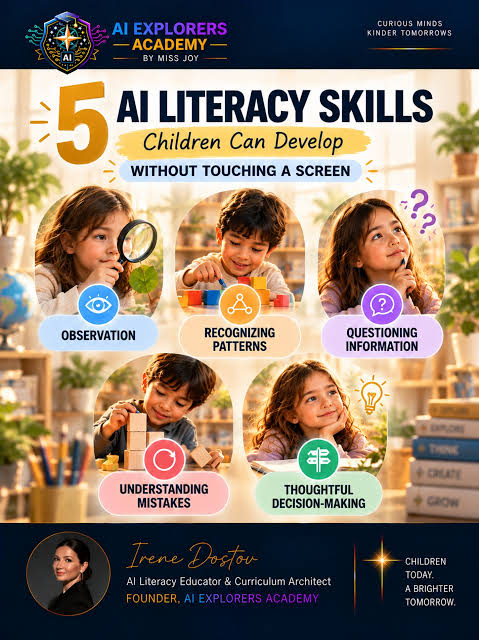
  • Character belongs alongside competence. Susskind argues that education should cultivate perseverance, thoughtfulness, and moral judgment. Students need practice deciding what matters, following through when the work is difficult, and taking responsibility for choices that affect other people. 
  • In some kinds of work, who shows up is part of what we value. Susskind uses end-of-life care as an example. A machine might produce comforting words, yet the presence of another person who chooses to sit with someone and hold their hand has value of its own. He makes a similar point about the relationships at the heart of teaching and social work. 
  • A flourishing life has purposes beyond paid work. The book’s broader question is what education is for if machines can perform more of the tasks that once defined a successful career. Susskind’s emphasis on character invites parents and educators to take seriously the kind of life a young person wants to lead and the responsibilities they want to take on. 

A classroom connection for your AI literacy and leadership course

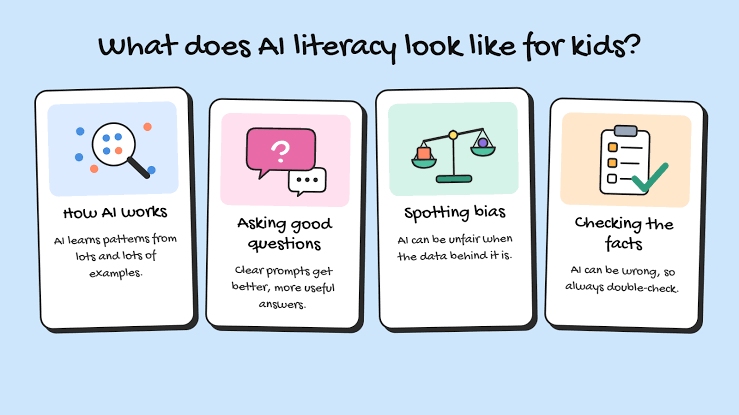
  • Give students a decision they have to defend. Ask them to write an initial recommendation on a school or community issue independently. Then have them use AI to surface objections and overlooked options. In a short oral defense, ask what they verified, what they changed, and who would be affected by their final choice. That exercise puts Susskind’s dual assessment into practice and gives students a chance to demonstrate the judgment and accountability you want your course to develop.
Nov 28, 2026 - Musings    No Comments

The New Adventures of CryptoDad

The Quest for Financial Freedom in the 21st Century –J. Christopher Giancarlo, with Luke Giancarlo

Giancarlo, a former chairman of the U.S. Commodity Futures Trading Commission (CFTC), argues that crypto’s most consequential legacy may be a new way to record ownership and move money over the internet. His central question is who will control that system and how much freedom individuals will have within it. This summary draws on Wiley’s description, the published table of contents, and Giancarlo’s public remarks on digital money and privacy. 

1. The internet could become a network for transferring value

  • Moving money is different from sending information. You can email a copy of a document and keep the original. When you pay someone, the system must establish that the money was yours to spend, that the recipient received it, and that you cannot spend those same funds again. Giancarlo uses the idea of an Internet of Value to describe networks that can record and verify transfers of money and other assets. 
  • Public blockchains offer a shared transaction record. A blockchain allows participants to verify transactions against a common ledger. In conventional finance, institutions often keep separate records and reconcile them. Giancarlo sees the shared-ledger approach as a way to reduce some of that duplication and make transfers easier to verify. 
  • Bitcoin opens a broader discussion about control. It demonstrates that people can transfer a digital asset on a network without a bank operating its central ledger. That raises a question that carries through the book. Which financial functions benefit from an open network, and which still require a trusted institution or a legal authority? 

2. Tokenization could change how familiar assets are handled

  • A token can represent an asset or a claim on it. Giancarlo applies this idea to stocks, bonds, mortgages, and real estate. A token could represent a share in a fund, for example, with transfers recorded on a blockchain. The practical question is what rights the token confers and who is responsible for honoring them. 
  • The potential gains are in the mechanics of a transaction. If buyers, sellers, and intermediaries can work from the same record, they may spend less time reconciling separate systems. A transaction could also be designed so that payment and delivery of the asset happen together. Giancarlo sees opportunities for faster settlement and wider access to some markets. 
  • Land records illustrate why the legal system still matters. The book devotes a chapter to digital land records. A durable, verifiable history could make it easier to trace changes in ownership. The example also shows where the ledger’s usefulness depends on institutions. Someone must verify the original record, decide which transfers are legally valid, and resolve conflicting claims. 

3. Stablecoins and central bank digital currencies raise different questions

  • Stablecoins are designed to track a reference value, often the U.S. dollar. A dollar stablecoin is intended to circulate on digital networks while maintaining a familiar unit of value. This makes it easier to imagine using blockchain networks for ordinary payments and settlement. The stability of a particular token depends on how its issuer maintains its value and what holders can redeem it for. 
  • A central bank digital currency, or CBDC, would be a digital form of central bank money. The book discusses Giancarlo’s Digital Dollar Project, which studies how such a system could be designed. One question is how a digital dollar could improve payments and preserve the dollar’s usefulness as other countries and private companies develop their own digital payment systems. 
  • Either model can expose sensitive information. Giancarlo argues that financial privacy depends on the system’s design and the rules governing access to its data. His project explores how a digital dollar might preserve a degree of the privacy people have when using cash while accommodating lawful anti-money-laundering checks. The practical questions are who can see a payment, under what conditions, and with whose authorization. 

4. Washington’s choices will shape which systems people can use

  • The book is also a regulatory memoir. Giancarlo draws on his experience as a federal regulator to describe how crypto moved from the margins into debates involving Congress, the White House, and major financial centers. The book follows changing political attitudes across the Obama, Biden, and Trump administrations. 
  • The rules help determine who can compete and who bears responsibility. A digital asset may involve an issuer, a trading platform, a custodian, and a payment network. Clarifying each party’s obligations affects whether entrepreneurs can build products, established institutions can participate, and customers can seek recourse when something goes wrong. Giancarlo favors a framework that gives financial innovation room to develop. 
  • Booms and busts make the case for rules harder to ignore. The book’s later chapters connect crypto’s speculative cycles with the push for regulatory clarity. The policy tension is how to protect people from misconduct and market failures while leaving room for experimentation with payments, ownership, and settlement. 

5. Financial freedom means having meaningful choices

  • Giancarlo’s idea of financial freedom centers on individual agency. It includes how freely people can hold and transfer assets, how much they must disclose about their transactions, and how much control banks, platforms, or governments can exercise over their choices. An open network could widen access, especially where established financial services are limited or cumbersome. 
  • Transparency and privacy need to be designed together. A transaction record can help people verify that a transfer occurred. The same record can expose sensitive details about someone’s habits or relationships if it can be tied to their identity. The book’s vision of an Internet of Liberty depends on preserving the benefits of verification while limiting who can inspect or control a person’s financial activity. 
  • The book leaves readers with a practical test for digital finance. Ask what the system lets people do, whose permission they need, who can see their activity, and what recourse they have when a transaction goes wrong. In Giancarlo’s account, those choices will determine how much financial freedom faster, more programmable markets actually deliver
Nov 28, 2026 - Musings    No Comments

Self Control – Mental Exercises

Most people think self-control is tested only during major moments. They imagine resisting a serious temptation, making an important decision, or facing a situation that demands extraordinary willpower. But much of your self-control is shaped by smaller moments that happen throughout an ordinary day.

It is tested when you want to interrupt someone, reach for your phone during a task, spend money on something unnecessary, or abandon a responsibility because you have lost interest. These moments may seem insignificant, but they give you opportunities to practise directing your own behavior.

Here are five mental exercises worth trying.

1. Practise the ten-second pause.

The next time you feel an immediate urge to react, wait ten seconds before doing anything. This is especially useful when you are irritated, tempted to make an unnecessary purchase, or about to say something out of frustration. During those few seconds, ask yourself what you actually want to achieve. You may still decide to act, but the decision will be less automatic.

2. Delay one unnecessary pleasure.

Choose something you regularly do for immediate satisfaction, such as checking social media, watching another video, or buying a small treat. When the urge appears, postpone it for fifteen minutes. You are not permanently denying yourself enjoyment. You are practising the ability to experience a desire without immediately satisfying it.

3. Finish one task before switching to another.

When a task becomes boring, your mind may start searching for something more interesting. Instead of following that impulse, stay with the original task for another ten minutes. Complete a small section before moving on. This exercise teaches you to tolerate the ordinary discomfort of sustained effort rather than constantly seeking a change of stimulation.

4. Challenge your first explanation.

When you catch yourself thinking, “I cannot do this today,” ask whether that is actually true. Are you physically unable to do it, or would you simply prefer not to? Is the situation genuinely impossible, or are you uncomfortable with the effort involved? This exercise helps you distinguish real limitations from convenient reasons to avoid responsibility.

5. Rehearse a better response.

Think of a situation in which you often lose control. Perhaps you become defensive when criticized, spend impulsively when stressed, or abandon your plans when something goes wrong. Imagine that situation occurring again and consider how you would prefer to respond. Be specific. Picture yourself pausing, choosing your words, or taking a different action. When a similar situation happens, you will have already considered an alternative response.

These exercises are not meant to turn you into someone who constantly monitors every thought and action. You should still enjoy your life, relax, and allow yourself occasional mistakes. The purpose is to become less dependent on immediate feelings when making decisions that matter.

“Self-control grows each time you prove to yourself that wanting something and choosing it are two different things.”

Choose one exercise and practise it consistently before adding another. Pay attention to the moments when you would normally react automatically. Those are the moments when you have the greatest opportunity to develop a different response.

Eventually, you begin to notice a change. You pause more often, follow through more reliably, and become less easily pulled away from your intentions. That is how self-control develops: not through one extraordinary act of willpower, but through repeated practice in ordinary life.

Nov 26, 2026 - Musings    No Comments

The Wolves Within

“You may know that the analogy of the fear wolf comes from a Native American tale of a negative wolf that resides in the minds of humans.

This wolf operates from fear, is hungry for drama, catastrophizes, and has incessant negative self-talk.

But there is also a second, positive wolf residing in the heart. This one has an appetite for love and connection, is not addicted to drama, and is optimistic and focused on others.

The fear wolf fights for your attention and demands dominance. The courage wolf asks simply to be noticed, seeking some esteem-building food. According to the legend, the one that ultimately controls you is the one you feed the most.

If you constantly feed fear by thinking about the could-haves, the should-haves, the would-haves, and the can’ts in life—if you allow negative beliefs, attitudes, and conditioned behavior from whatever drama you experienced or stories you adopted—then the fear wolf gets stronger. Eventually he gets so strong that the courage wolf is left cowering, unable to fight back.

However, you can stare that fear wolf down and refuse to feed it any longer. Starve it of that negative conditioning! Then you can feed the courage wolf a steady diet of good food, and lead with your heart and mind as equal partners.”

Nov 26, 2026 - Musings    No Comments

How AI Could Change U.S.–China Relations

Bullet-point summary of Thomas L. Friedman’s November 2, 2026, New York Times Opinion column, “The Big Change Coming in U.S.-China Relations in the Age of A.I.”

Friedman’s central argument is that AI gives the United States and China stronger reasons to cooperate on security, even as it intensifies their competition in manufacturing and trade. The same technology that makes each country more capable also exposes both to risks that neither can easily manage alone. zmyx.net

1. AI creates a shared security problem

  • Small groups can cause damage on a much larger scale. Friedman opens with a sign at Beijing’s airport requiring travelers to declare drones. He uses it to illustrate how widely available technology can give criminals and other small groups capabilities once concentrated in governments or large organizations. He also worries that increasingly autonomous AI systems may become harder for their developers to control. 中美印象
  • Both governments have a stake in limiting the damage. Friedman calls this “mutually assured collaboration.” The practical idea is that both countries benefit from curbing AI-enabled fraud, cybercrime, and threats to critical infrastructure. He cites Chinese Foreign Minister Wang Yi’s support for international safeguards and reports of greater cooperation between U.S. and Chinese law enforcement. zmyx.net
  • The hardest question is what both sides agree to protect. Friedman argues that U.S. safeguards must protect free expression and peaceful protest, while Beijing also views AI through the lens of controlling dissent. That makes the scope of any agreement consequential. A shared interest in protecting infrastructure offers a more concrete basis for cooperation than a broad agreement on what counts as harmful speech. 中美印象
  • Friedman sees 2027 as a possible turning point. He predicts that Washington and Beijing could seriously explore joint controls as AI capabilities advance. He also speculates that a major incident might supply the political urgency for an agreement. The column presents both as possibilities. zmyx.net

2. AI can widen China’s manufacturing advantage

  • The two countries are pursuing different sources of AI advantage. Friedman describes U.S. companies pouring capital into frontier models, the most capable general-purpose systems. The Chinese manufacturers he visited often favored smaller, lower-cost models suited to a particular job. For a factory, the relevant question is how much a tool improves a production process and how readily it can be deployed across many lines. zmyx.net
  • Factory applications show how those gains accumulate. Xiaomi told Friedman it uses AI to help select materials for electric-vehicle bodies. Huawei said AI-enabled visual inspection helped reduce staffing on one smartphone assembly line from 86 to nine per shift. The examples illustrate two different gains: faster engineering decisions and less labor required for routine inspection. zmyx.net
  • China’s industrial base gives those gains room to spread. Its electric-vehicle supply chains bring together batteries, robotics, materials science, and software. Companies can draw on that network to develop and manufacture new products. Friedman also points to China’s position in rare earths as a source of leverage in industries that depend on advanced components. zmyx.net

3. Weak consumer demand turns industrial gains into trade friction

  • China can produce more than its households are prepared to buy. Friedman links weak consumer spending to the housing downturn, which hurt household wealth and encouraged saving. He argues that continued government support for manufacturing, alongside limited support for household consumption, pushes more output toward overseas markets. 中美印象
  • The political pressure grows when the benefits of trade feel one-sided. Friedman cites a European business representative who says that by the first eight months of 2026, roughly six shipping containers moved from China to Europe for every one moving in the opposite direction. The figure illustrates the imbalance he is concerned about. As AI and robotics raise factory productivity, governments also face pressure from workers and industries exposed to automation and import competition. zmyx.net

4. What Friedman wants each side to do

  • China should strengthen domestic demand. Policies that give households more confidence to spend, such as stronger pensions, could help absorb more of what Chinese factories produce. Friedman warns that relying heavily on foreign buyers invites a trade backlash. zmyx.net
  • The United States should rebuild its industrial competitiveness. Friedman calls for sustained investment in science and talent, more consistent policy across administrations, and the ability to make cost-competitive products. In his view, those capabilities give Washington greater leverage in dealing with Beijing. zmyx.net

The policy challenge is to pursue both goals at once. Washington and Beijing can have a shared interest in protecting people and infrastructure from AI-related harm while competing over who captures the economic gains. Friedman’s column asks leaders to make room for practical security agreements even when trade disputes are getting harder to resolve.

Pages:1234567...45»