Nov 28, 2026 -  Musings
 No Comments
Musings No Comments What Should My Children Do? A Human’s Guide to the Age of AI
Daniel Susskind · Bullet-point summary
- Central argument. Prepare young people to thrive across several possible futures. Susskind sees three priorities for education in the AI age: strengthen foundational skills, teach students to work effectively with AI, and develop the character and judgment they will need to decide what to do with those capabilities.
1. The limits of “future-proof” career advice
- Predictions about safe skills can age quickly. Susskind opens with England’s decision to make coding part of the national curriculum. Programming looked like a strong bet for a world increasingly dependent on software. Within a decade, generative AI could write code itself. The example shows how quickly the value of particular tasks within a field can change.
- Think about what people do within a job. A profession combines many activities. In law, for example, AI may take on more preliminary document review while lawyers continue to exercise judgment about a client’s needs and how to present a case. A familiar job title can survive even as the day-to-day work and the way newcomers learn it change substantially.
- Build the capacity to learn again. Susskind argues that adults will need opportunities to retrain throughout their working lives. For a young person, knowing how to learn an unfamiliar subject, seek feedback, and revise an approach can be as consequential as the first qualification they earn.
2. Reading, mathematics, and critical thinking still matter
- Foundational skills make further learning possible. Reading closely helps students understand difficult ideas. Numeracy helps them interpret quantities and check whether an answer makes sense. Critical thinking helps them weigh evidence and recognize weak reasoning. All three remain useful across subjects and careers.
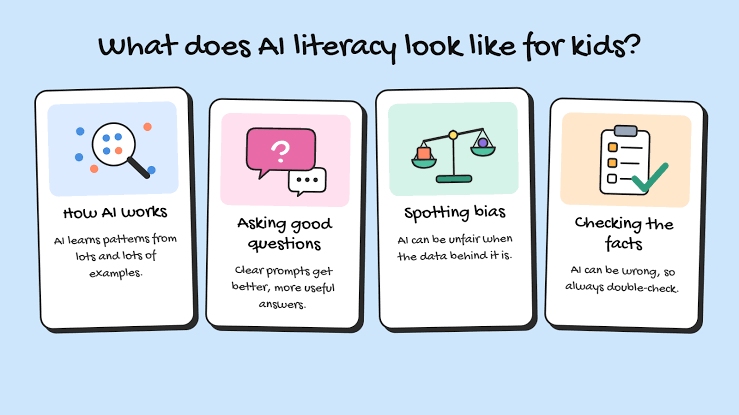
- Independent knowledge gives students a way to check AI. An AI system can give a polished explanation with a wrong calculation, a fabricated detail, or a faulty assumption. A student who understands the material can ask a better follow-up question, consult the original source, or recognize when the answer needs to be redone.
- The learning happens partly in the work itself. Reading a challenging passage, reasoning through a problem, and revising a rough draft give students practice they can draw on later. If a tool performs those steps every time, the student can come away with a finished assignment and too little practice in the skill the assignment was designed to teach.
3. “Teach both, test both”
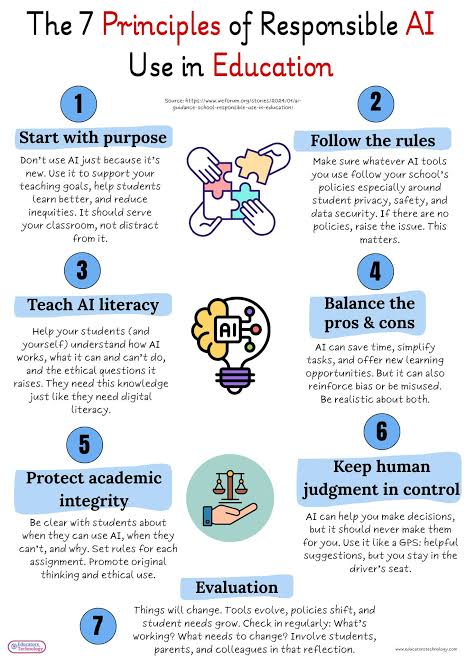
- Teach and assess students both with and without AI. Susskind draws on the example of calculators in mathematics education. Students can practice arithmetic independently and also learn to use calculators for more demanding problems. He proposes applying the same principle across subjects, including history, English, music, and art.
- Give each kind of assessment a clear purpose. An unaided task can show whether a student understands a concept and can explain it. An AI-assisted task can show whether the student can frame a question, evaluate the response, correct errors, and use the tool to tackle something more ambitious. In both cases, the teacher needs evidence of what the student can actually do.
- Use AI to extend what a student can explore. Susskind describes a parent and daughter who used AI to plot the characters’ journeys in Dracula on an interactive historical map. The tool helped the student connect the novel to geography and pursue a question that came from her reading.
- Personalized tutoring is one promising application. Susskind sees potential in systems that can explain a concept in several ways, adapt practice to a student’s level, and offer feedback when the student is stuck. Teachers still have a central role in choosing learning goals, noticing how students are doing, and modeling the habits and values they want students to develop.
4. Career direction begins with a problem worth solving
- Ask what problem you want to spend your time solving. A student drawn to law might care about helping people navigate the justice system. A student interested in medicine might care about helping people live healthier lives. Identifying the underlying problem gives a young person a direction even as job titles, tools, and routes into the field evolve.
- Develop expertise in a field you care about. Knowing a field helps you see which questions matter, understand the people affected, and recognize when an AI-generated answer fails to account for an important detail. That expertise gives you a basis for deciding what to delegate and what to examine yourself.
- Rethink how beginners gain experience. As AI takes over some routine assignments, employers may need new ways to give newcomers practice and feedback. One example discussed in the book is using simulated trials to give junior lawyers earlier opportunities to develop their craft.
5. Education also shapes the kind of person a student becomes
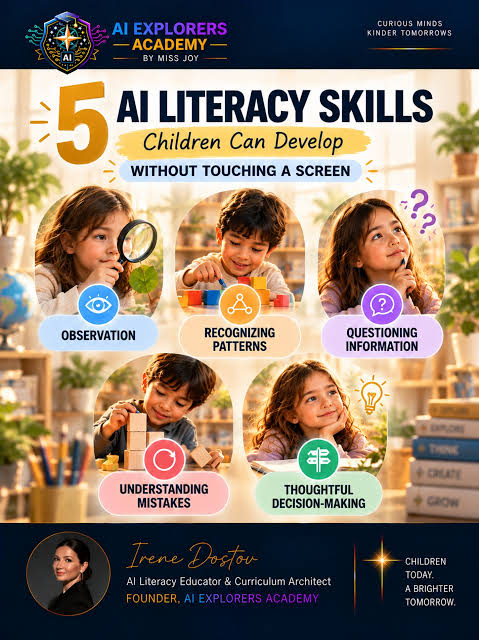
- Character belongs alongside competence. Susskind argues that education should cultivate perseverance, thoughtfulness, and moral judgment. Students need practice deciding what matters, following through when the work is difficult, and taking responsibility for choices that affect other people.
- In some kinds of work, who shows up is part of what we value. Susskind uses end-of-life care as an example. A machine might produce comforting words, yet the presence of another person who chooses to sit with someone and hold their hand has value of its own. He makes a similar point about the relationships at the heart of teaching and social work.
- A flourishing life has purposes beyond paid work. The book’s broader question is what education is for if machines can perform more of the tasks that once defined a successful career. Susskind’s emphasis on character invites parents and educators to take seriously the kind of life a young person wants to lead and the responsibilities they want to take on.
A classroom connection for your AI literacy and leadership course
- Give students a decision they have to defend. Ask them to write an initial recommendation on a school or community issue independently. Then have them use AI to surface objections and overlooked options. In a short oral defense, ask what they verified, what they changed, and who would be affected by their final choice. That exercise puts Susskind’s dual assessment into practice and gives students a chance to demonstrate the judgment and accountability you want your course to develop.