Sep 12, 2026 -  Musings
  No Comments
Musings No Comments Courage is Calling

Ryan Holiday — Two-Page Summary
Central message
- Courage is one of the four cardinal Stoic virtues, alongside wisdom, justice, and self-discipline.
- Holiday describes courage as the foundational virtue because the other virtues accomplish little unless we have the courage to practice them.
- Courage is not the absence of fear. It is the decision to move forward despite fear—when judgment, duty, or conscience tells us that action is necessary.
- Every person repeatedly faces a choice between:
- Fear and courage
- Comfort and growth
- Self-protection and service
- Silence and truth
- Avoidance and responsibility
- Courage is not reserved for soldiers, political leaders, or historical heroes. It is required in ordinary life: having a difficult conversation, admitting a mistake, beginning an uncertain project, standing against wrongdoing, or helping someone in danger.
- The book is organized around three ascending levels: Fear, Courage, and Heroism. Fear must be understood and managed; courage must be practiced; heroism occurs when courage is placed in the service of others.
Part I: Fear
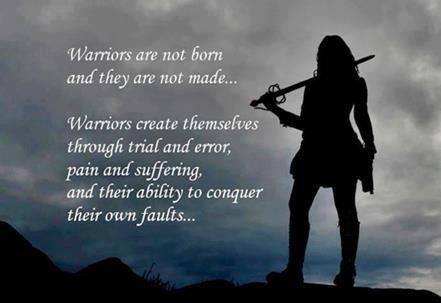
- Fear is natural. It is an evolutionary warning system intended to protect us from danger.
- The problem is not experiencing fear. The problem arises when fear controls our judgment, narrows our perception, or prevents us from fulfilling our responsibilities.
- Many modern fears concern possibilities rather than immediate dangers:
- Fear of failure
- Fear of embarrassment
- Fear of criticism
- Fear of losing status
- Fear of uncertainty
- Fear of being different
- Fear of making the wrong decision
- We often suffer more from imagining what might happen than from what actually happens.
- Fear exaggerates obstacles. It tells us that discomfort will be unbearable, failure will be permanent, and criticism will destroy us.
- Cowardice frequently appears in respectable disguises:
- “I need more information.”
- “This isn’t the right time.”
- “Someone else will handle it.”
- “I’m only being realistic.”
- “There is nothing I can do.”
- Excessive caution can become a form of self-deception. Preparation is valuable, but endless preparation may simply postpone the moment when action is required.
- Anxiety focuses attention on what might go wrong. Preparation asks what can be done now.
- The Stoic response is to separate reality from imagination:
- What are the facts?
- What am I assuming?
- What is actually dangerous?
- What discomfort am I merely trying to avoid?
- What remains within my control?
- Fear becomes more powerful when we avoid it. Every act of avoidance teaches the mind that the feared situation is too dangerous to face.
- Conversely, taking small courageous actions builds evidence that we can tolerate discomfort and uncertainty.
- Holiday therefore treats courage as a habit. We must practice it in ordinary moments so that it is available during extraordinary ones.
Part II: Courage

- Courage means acting according to one’s principles even when the outcome is uncertain.
- It is not impulsiveness, recklessness, aggression, or thrill-seeking. Genuine courage is guided by judgment and directed toward a worthy purpose.
- Recklessness ignores danger. Courage sees danger clearly, prepares intelligently, and acts when action is justified.
- Courage begins with accepting reality. Denial does not make a difficult situation safer; it only delays an effective response.
- We develop courage by moving toward what frightens us in manageable steps.
- Preparation reduces unnecessary fear:
- Study the situation.
- Strengthen the required skills.
- Anticipate likely problems.
- Decide beforehand what principles cannot be compromised.
- Create contingency plans.
- Then act.
- Competence supports courage. The better prepared we are, the less mental energy fear can consume.
- Courage often requires initiative. The courageous person does not wait for perfect conditions, unanimous approval, or guaranteed success.
- There is rarely a completely safe moment to begin something important.
- Failure is not necessarily evidence that an action was mistaken. A person can make a courageous and ethical decision that produces an unfavorable outcome.
- We should judge ourselves primarily by the quality of our choices, effort, and character—not by outcomes we could not fully control.
- Moral courage may be more difficult than physical courage because it can require:
- Standing alone
- Risking reputation or employment
- Challenging authority
- Defending an unpopular truth
- Admitting personal wrongdoing
- Refusing to participate in unethical conduct
- Speaking honestly is courageous, but courage is not an excuse for cruelty. Truth should be expressed with judgment, restraint, and respect.
- Leadership requires courage because leaders must make decisions before every uncertainty has been removed.
- A courageous leader:
- Faces unpleasant facts.
- Accepts responsibility.
- Communicates honestly.
- Protects people rather than personal status.
- Makes the necessary decision.
- Remains teachable enough to change course.
- Courage is contagious. One person’s example can give others permission to act. Fear and passivity can spread in exactly the same way. Holiday explicitly emphasizes that courage can be strengthened through repeated practice.
Part III: Heroism

- Heroism is courage elevated beyond personal ambition.
- Ordinary courage asks, “Can I face this?” Heroic courage asks, “Who needs me to face this?”
- Courage becomes heroic when it serves:
- Another person
- A community
- A moral principle
- A future generation
- A cause greater than personal comfort
- Heroism does not require fame, public recognition, or dramatic sacrifice. Quiet acts of service may be genuinely heroic.
- A heroic person accepts personal risk or inconvenience because protecting others matters more than remaining comfortable.
- The highest courage is not concerned with appearing brave. It focuses on doing what the situation requires.
- Heroism includes compassion. Courage without concern for others can become vanity, domination, or aggression.
- We should not wait for someone else to intervene. Responsibility often belongs to the person who sees what needs to be done.
- History’s courageous figures were not necessarily fearless or flawless. They became important because they acted at decisive moments despite uncertainty and personal limitations.
- Small decisions prepare us for larger tests. Character is formed long before the crisis that reveals it.
Holiday’s practical lessons
- Name the fear clearly; vague fear is harder to manage.
- Distinguish genuine physical danger from discomfort, embarrassment, or uncertainty.
- Focus on what is within your control: preparation, effort, judgment, conduct, and response.
- Take the smallest meaningful action instead of waiting to feel confident.
- Practice voluntary discomfort so that comfort does not become a requirement for action.
- Tell the truth, particularly when silence would protect you at someone else’s expense.
- Ask for help when necessary; courage does not require solitary struggle.
- Admit mistakes promptly. Defending an error because of pride is another form of cowardice.
- Choose worthy causes. Courage employed for an unjust purpose is not virtue.
- Protect people with less power, even when doing so carries a cost.
- Remember that courage grows through use. Each courageous decision makes the next one more attainable.
Final takeaway
- Courage Is Calling presents life as a continuing series of invitations to act with greater bravery.
- The question is not whether we feel afraid. The question is whether fear will determine our behavior.
- Holiday’s essential formula can be summarized as:See reality clearly → prepare intelligently → control what you can → act despite fear → use courage in service of others.
- The ultimate goal is not simply to become bolder. It is to become dependable—the person who can be counted on to do the right thing when circumstances are difficult, uncertain, or dangerous.
- For leadership, the book’s strongest lesson is this: Courage converts values from ideas into action. Without it, integrity, justice, wisdom, and service remain intentions rather than lived character.