Musings
  No Comments
 The Way of Excellence
The following is a summary of Brad Stulberg’s book, The Way of Excellence through the lens of AI Literacy, Stoicism, and Precision Leadership.

The central idea of The Way of Excellence can be expressed in distinctly Stoic terms:
True excellence is less about what you acquire or achieve and more about the person you become through disciplined pursuit of what matters.
That closely resembles the Stoic conception of aretē—excellence of character. For Epictetus, Seneca, and Marcus Aurelius, the good life was not principally about status, wealth, comfort, or applause. It was about developing the capacity to think clearly, govern yourself, act courageously, treat others justly, and respond wisely to circumstances you cannot control.
That makes Stoicism an excellent philosophical foundation beneath Stulberg’s model.
1. Excellence begins with character, not achievement
Stulberg distinguishes true excellence from “pseudo-excellence”—the pursuit of status, recognition, optimization, productivity, and external validation.
The Stoics made essentially the same distinction nearly 2,000 years ago.
They regarded wealth, reputation, position, popularity, and even many external accomplishments as things that may be desirable but do not determine whether a person lives well.
What matters most is character.
This produces a powerful educational distinction:

Achievement asks:
“What did I accomplish?”
Excellence asks:
“How well did I perform?”
Stoicism asks:
“Who did I become while doing it?”
For Precision Leadership, all three matter—but character governs the other two.
2. Control what you can control
Perhaps the clearest connection is the Stoic Dichotomy of Control.
Some things are substantially within our control:
- Our judgments
- Our attention
- Our preparation
- Our effort
- Our choices
- Our response
- Our character
Other things are not:
- Other people’s opinions
- Economic conditions
- Organizational politics
- Technological change
- AI development
- Unexpected crises
- Whether every decision produces the outcome we wanted
Stulberg’s pursuit of excellence shifts attention away from obsessing over outcomes and toward the quality of the process.
That is profoundly Stoic.
Precision Leadership version
When pressure rises:
Don’t ask first:
“Can I control what is happening?”
Ask:
“What remains under my control right now?”
Then act there.
That is almost a perfect philosophical foundation for your Barrel Roll Theory.
You could not control every physical force acting on the T-38.
But you could recover perception, judgment, and deliberate action.
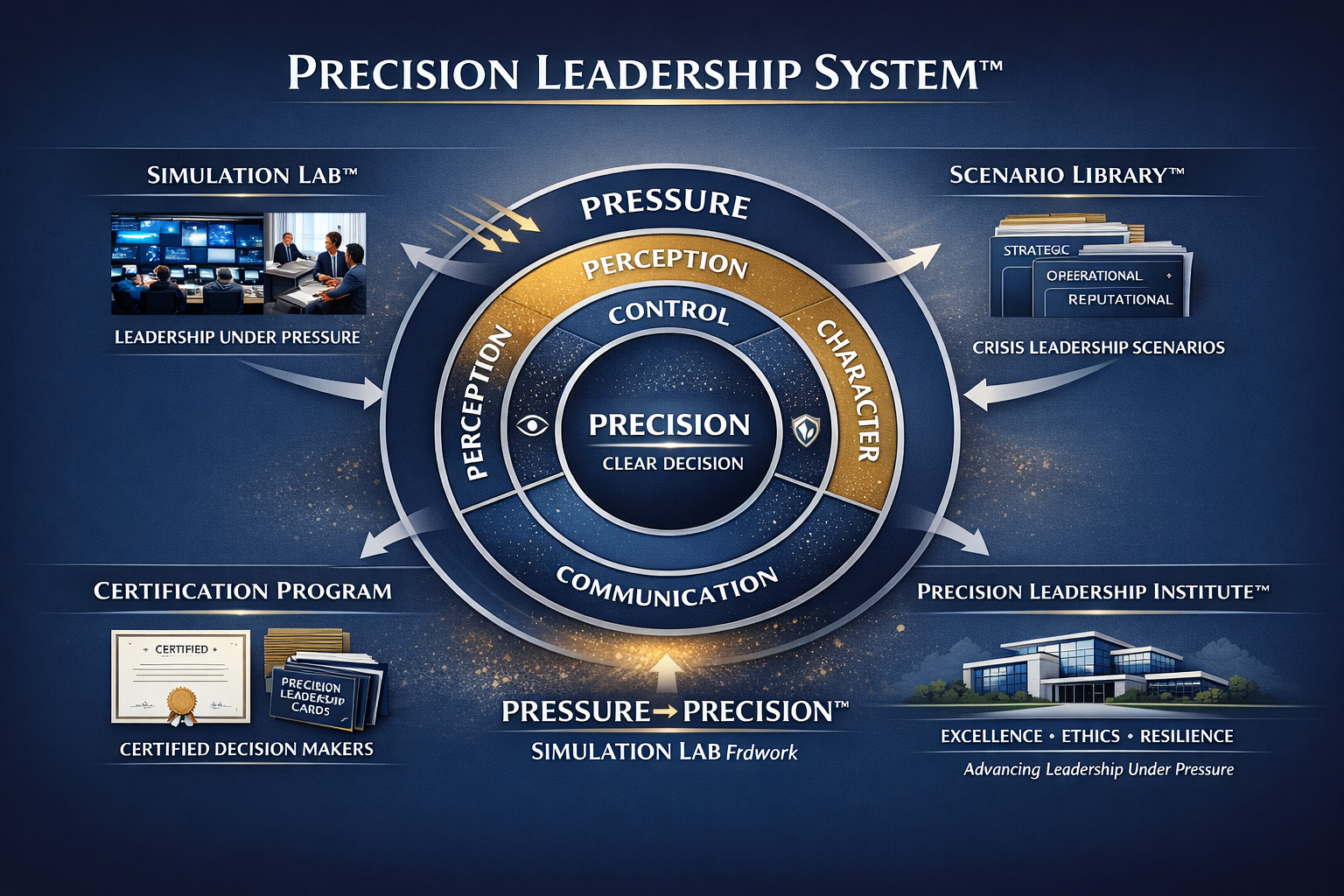
Pressure → Perception → Control → Character → Precision
The Stoic element isn’t separate from your Compass. It runs through the entire sequence.
3. Perception comes before action
Marcus Aurelius repeatedly returned to the importance of examining one’s impressions before accepting them as reality.
An event occurs.
Then we interpret it.
Then we respond.
Those are not the same thing.
This maps beautifully onto Precision Leadership:
EVENT → PERCEPTION → JUDGMENT → RESPONSE
Under pressure, leaders frequently collapse those four stages into one:
EVENT → REACTION
Stoic training creates space between stimulus and response.
Precision Leadership teaches leaders to operate intelligently within that space.
And Stulberg’s emphasis on attention and focus strengthens the same capacity.
Thus:
Stoicism trains perception. Precision Leadership operationalizes it.