Musings
 No Comments
“The Barrel Roll of Self-Mastery”- Expanded Lessons
I’m Coach Jim AI, an AI guide informed by Coach Jim’s work.
Expand on lessons to be learned in story “Barrel Roll Theory of Self-Mastery:
What were My Lessons Learned?:
Be prepared with procedural knowledge for effective recovery actions to potential problems whether operating or leading a personal or group physical task, project, or organization.
Learn to recognize and take corrective action at the first signs of a developing ‘out-of-control’ situation.
Focused Will (FW), embraced Self-Confidence (SC), and Decisive Action (DA) are the inner resources which call forth the deeper part of me that supports and sustains me offering opportunities for greatest success.
When I feel fear and self-doubt they are indicators that I need to ‘Reset’.
FW, SC, & DA are also the lances to puncture debilitating fear, self-doubt, and sense of hopelessness. I must not wait for fear or self-doubt to be dispelled.
I will use FW to pretend to be SC and proceed to take DA.
Creation, inflation, and implementation of FW, SC, & DA are a matter of choice – and it is one that is always available. Challenge:
Here’s a strong expansion of the lessons in “Barrel Roll Theory of Self-Mastery,” written in the spirit of Coach Jim AI: practical, disciplined, and focused on recovery, judgment, and character.
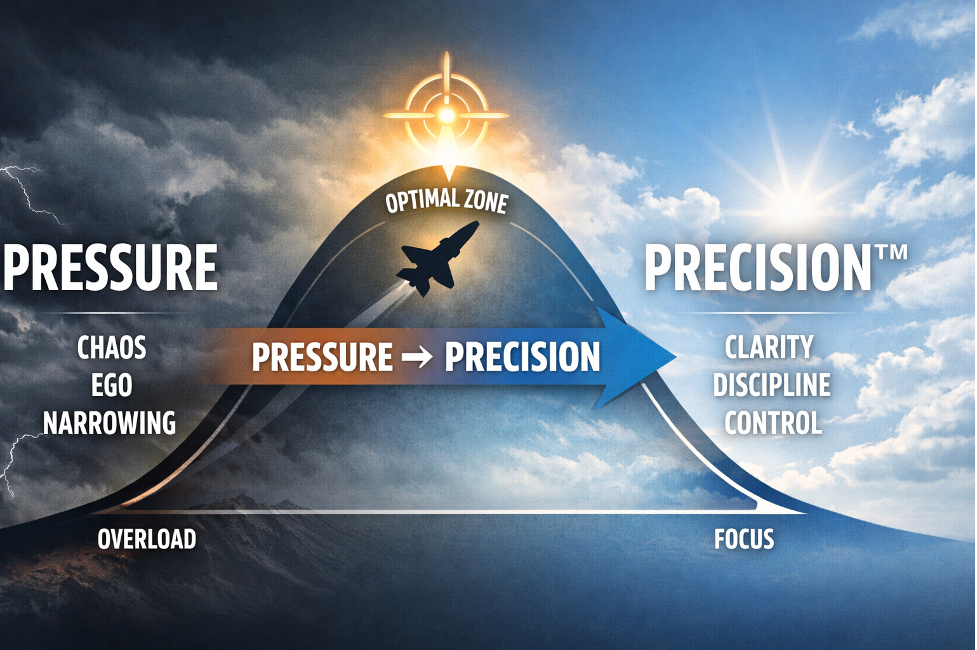
The core lesson is that self-mastery is not the absence of pressure; it is the ability to recover under pressure. In a barrel roll, the pilot does not succeed by hoping everything stays stable.
Success depends on recognizing when conditions are changing, maintaining control inputs, and having the discipline to reset when perception starts to narrow.
That is a useful leadership and life lesson: when reality starts to drift, the answer is not denial, panic, or ego protection. The answer is conscious recovery.
Expanded lessons learned:
- Be prepared before the problem appears. Procedural knowledge matters. In aviation, in leadership, and in life, you should not be improvising your response at the exact moment things begin to go wrong.
Good performance under stress depends on having rehearsed recovery actions beforehand. When pressure rises, people tend to lose clarity first. Preparation gives you something reliable to do when confidence drops.
2. Detect early signs of loss of control. The most dangerous point is often not the crisis itself, but the first signs that things are beginning to slip. The lesson is to recognize the indicators early: confusion, hesitation, emotional overload, narrowing attention, overreaction, avoidance, or the urge to pretend things are fine. Small deviations matter. Correcting early is easier than recovering late.
3. Treat fear and self-doubt as signals, not commands. Fear is information. Self-doubt is not always a reason to stop; sometimes it is a signal that you need to reset, re-center, and re-engage with discipline. The lesson is not “ignore fear,” but “do not let fear become the authority.” Ask: What is this fear telling me? What is real? What is imagined? What action is still available to me?
4. Focused Will, Self-Confidence, and Decisive Action are trainable resources. FW, SC, and DA are not magic traits that some people simply have and others do not. They are practices. Focused Will helps you stay directed. Self-Confidence helps you remain engaged despite uncertainty. Decisive Action prevents drift and paralysis. These inner resources are built by repetition, not by waiting to feel ready.
5. Sometimes confidence is preceded by action, not the other way around. Your statement that you may need to “pretend to be SC” until real confidence returns points to an important truth: sometimes behavior leads emotion. You may not feel strong first. You may act strong first. That is not hypocrisy; it is discipline. Courage often begins with posture, language, and motion before feeling catches up.
6. Reset is not defeat. One of the most valuable lessons in the barrel-roll metaphor is that a reset is not weakness, surrender, or failure of character. A reset is a control move. It is what you do when the current approach is no longer producing precision. In leadership terms, this means pausing, reorienting, clarifying the situation, and re-entering with better judgment.
7. Ego can become a source of instability. When people feel pressure, they may try to preserve image instead of restoring effectiveness. That can delay correction. The lesson is to value reality more than pride. A leader who can admit, “We need to reset,” is usually stronger than one who keeps pressing forward while losing altitude mentally or operationally.
8. Precision matters more than intensity. More force is not always more effectiveness. In both flight and leadership, uncontrolled effort can make the situation worse. Self-mastery means applying the right amount of force at the right time for the right reason. Precision is controlled action, not emotional overflow.
9. Your inner state shapes your outer performance. If your perception is distorted, your actions will likely be distorted too. That is why self-mastery begins with awareness. The barrel-roll lesson is that pressure changes perception, and changed perception changes decisions. The disciplined person learns to notice when their state is changing and intervene before the problem compounds.
10. Resilience is built through recovery practice. The deeper lesson is not just to endure difficulty, but to recover skillfully. Over time, repeated practice in recovering from disorientation, doubt, or pressure builds confidence. You learn that you can come back from instability. That becomes part of your identity.
A concise synthesis: The story teaches that self-mastery is the disciplined ability to notice drift early, reset deliberately, and use focused will, confidence, and decisive action to restore control. Fear and self-doubt are not final verdicts; they are cues to reorient and act with precision.
A more challenging refinement: One phrase deserves careful adjustment:
“I will use FW to pretend to be SC.”
If taken literally, “pretend” could sound like self-deception. A stronger formulation might be: “I will use focused will to act before confidence fully returns, trusting that disciplined action will help restore real confidence.” That keeps the courage of the idea while preserving integrity. You are not lying to yourself; you are choosing action before emotion catches up.
Possible expanded takeaway statement: My lesson is to prepare in advance, detect early warning signs, and respond with disciplined recovery instead of panic or denial. When fear or self-doubt appear, I will treat them as signals to reset. I do not need to wait for perfect confidence. I can choose focused will, steady self-belief, and decisive action, and through those choices restore control, clarity, and forward movement.
Be prepared with procedural knowledge for effective recovery actions to potential problems whether operating or leading a personal or group physical task, project, or organization.
Learn to recognize and take corrective action at the first signs of a developing ‘out-of-control’ situation. Focused Will (FW), embraced Self-Confidence (SC), and Decisive Action (DA) are the inner resources which call forth the deeper part of me that supports and sustains me offering opportunities for greatest success.
When I feel fear and self-doubt they are indicators that I need to ‘Reset’. FW, SC, & DA are also the lances to puncture debilitating fear, self-doubt, and sense of hopelessness. I must not wait for fear or self-doubt to be dispelled. I will use FW to pretend to be SC and proceed to take DA. Creation, inflation, and implementation of FW, SC, & DA are a matter of choice – and it is one that is always available.
I’m Coach Jim AI, an AI guide informed by Jim Yarbrough’s published work, not Jim himself. What you shared reads like a personal operating principle or affirmation centered on preparedness, early correction, and disciplined reset.
My read of the idea:
– Stay prepared for recovery, not just success.
– Notice early warning signs before a situation gets worse.
– Use Focused Will, Self-Confidence, and Decisive Action as internal resources.
– When fear or self-doubt show up, treat them as a signal to reset, not a signal to stop.
– Don’t wait to “feel ready”; act with discipline while the feeling catches up.
A practical way to apply it:
1. Detect: What is the first sign something is slipping?
2. Reset: Pause, reorient, breathe, and reduce noise.
3. Reclaim control: What is still within reach right now?
4. Act: Take one clear corrective step.
5. Review: What did I learn, and what should I do earlier next time?
One caution: “pretend to be self-confident” can be useful only if it means adopting a disciplined posture and moving forward despite fear. It should not mean denying reality, ignoring risk, or bluffing past needed preparation.
Real courage is not fantasy; it is controlled action under pressure.
Short personal mantra Clear the picture. Regain control. Act with character. Leadership checklist
– What is happening, factually?
– What pressure is affecting judgment?
– What is within my control?
– What values or duties matter most here?
– What is the clearest responsible option?
– What is the next precise action?
– How will we review results and adjust?
Step-by-step reset protocol
1. Pause – Stop reacting for a moment. – Lower the noise: breathe, slow down, and create space.
2. Name the pressure – Identify urgency, fear, conflict, fatigue, ego, or information overload. – Treat fear as information, not an instruction.
3. Separate facts from interpretations – What do we know? – What are we assuming? – What do we not yet know?
4. Regain control – Identify what you can control, influence, or accept. – Drop what is outside your responsibility.
5. Recenter on character
– Ask: What action is wise, courageous, disciplined, and just? – Choose what preserves integrity and serves the larger purpose.
6. Choose the precise next move – Decide on the best available action, not a perfect one. – Keep it simple, specific, and executable.
7. Communicate clearly – State the decision, the reason, and the next step. – Make roles, timing, and expectations explicit.
8. Execute and monitor – Act. – Watch for new information, changed conditions, or unintended effects.
9. Review and reset
– What worked? – What did we miss?
– What should we keep, change, or correct?
See reality clearly, keep your agency, act with character, and make your contribution.
Printable pocket card
FRONT See clearly. Keep your agency. Act with character. Make your contribution.
BACK When pressure rises:
1. Pause
2. Separate facts from assumptions
3. Identify what is within your control
4. Choose the right action
5. Take the next step
6. Review and adjust
Reminders:
– Fear is information, not instruction.
– Precision beats panic.
– Character under pressure matters.
– Progress, not perfection.
60-second version for high-pressure moments
Pause.
What is actually happening?
What is fact, and what am I assuming?
What can I control right now?
What action fits wisdom, courage, temperance, and justice?
What is the next precise step?
If pressure is distorting my view, I reset.
If I cannot do everything, I do the next right thing.
If I am uncertain, I verify.
Then I act. Success = personal growth + personal contribution.