Browsing "Musings"
Nov 21, 2026 - Musings    No Comments

“The Barrel Roll of Self-Mastery”- Expanded Lessons


I’m Coach Jim AI, an AI guide informed by Coach Jim’s work.

Expand on lessons to be learned in story “Barrel Roll Theory of Self-Mastery:

What were My Lessons Learned?:
Be prepared with procedural knowledge for effective recovery actions to potential problems whether operating or leading a personal or group physical task, project, or organization.

Learn to recognize and take corrective action at the first signs of a developing ‘out-of-control’ situation.

 Focused Will (FW), embraced Self-Confidence (SC), and Decisive Action (DA) are the inner resources which call forth the deeper part of me that supports and sustains me offering opportunities for greatest success.

When I feel fear and self-doubt they are indicators that I need to ‘Reset’.

FW, SC, & DA are also the lances to puncture debilitating fear, self-doubt, and sense of hopelessness. I must not wait for fear or self-doubt to be dispelled.

I will use FW to pretend to be SC and proceed to take DA.

Creation, inflation, and implementation of FW, SC, & DA are a matter of choice – and it is one that is always available. Challenge:

Here’s a strong expansion of the lessons in “Barrel Roll Theory of Self-Mastery,” written in the spirit of Coach Jim AI: practical, disciplined, and focused on recovery, judgment, and character.  

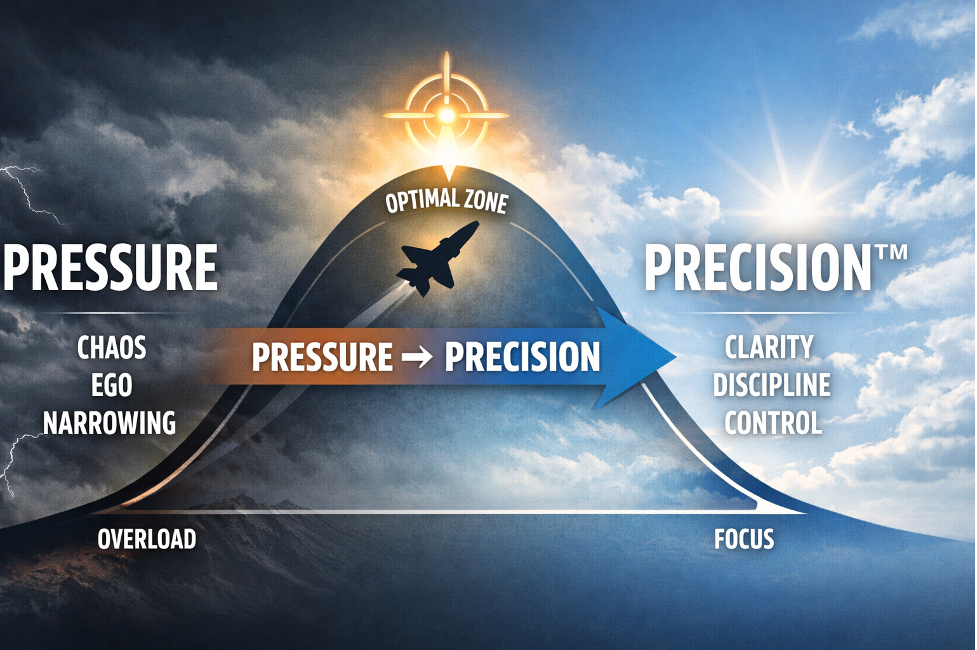
The core lesson is that self-mastery is not the absence of pressure; it is the ability to recover under pressure. In a barrel roll, the pilot does not succeed by hoping everything stays stable.

Success depends on recognizing when conditions are changing, maintaining control inputs, and having the discipline to reset when perception starts to narrow.

That is a useful leadership and life lesson: when reality starts to drift, the answer is not denial, panic, or ego protection. The answer is conscious recovery.

Expanded lessons learned:

  1. Be prepared before the problem appears. Procedural knowledge matters. In aviation, in leadership, and in life, you should not be improvising your response at the exact moment things begin to go wrong.

Good performance under stress depends on having rehearsed recovery actions beforehand. When pressure rises, people tend to lose clarity first. Preparation gives you something reliable to do when confidence drops.

2. Detect early signs of loss of control. The most dangerous point is often not the crisis itself, but the first signs that things are beginning to slip. The lesson is to recognize the indicators early: confusion, hesitation, emotional overload, narrowing attention, overreaction, avoidance, or the urge to pretend things are fine. Small deviations matter. Correcting early is easier than recovering late.

3. Treat fear and self-doubt as signals, not commands. Fear is information. Self-doubt is not always a reason to stop; sometimes it is a signal that you need to reset, re-center, and re-engage with discipline. The lesson is not “ignore fear,” but “do not let fear become the authority.” Ask: What is this fear telling me? What is real? What is imagined? What action is still available to me?

4. Focused Will, Self-Confidence, and Decisive Action are trainable resources. FW, SC, and DA are not magic traits that some people simply have and others do not. They are practices. Focused Will helps you stay directed. Self-Confidence helps you remain engaged despite uncertainty. Decisive Action prevents drift and paralysis. These inner resources are built by repetition, not by waiting to feel ready.

5. Sometimes confidence is preceded by action, not the other way around. Your statement that you may need to “pretend to be SC” until real confidence returns points to an important truth: sometimes behavior leads emotion. You may not feel strong first. You may act strong first. That is not hypocrisy; it is discipline. Courage often begins with posture, language, and motion before feeling catches up.

6. Reset is not defeat. One of the most valuable lessons in the barrel-roll metaphor is that a reset is not weakness, surrender, or failure of character. A reset is a control move. It is what you do when the current approach is no longer producing precision. In leadership terms, this means pausing, reorienting, clarifying the situation, and re-entering with better judgment.

7. Ego can become a source of instability. When people feel pressure, they may try to preserve image instead of restoring effectiveness. That can delay correction. The lesson is to value reality more than pride. A leader who can admit, “We need to reset,” is usually stronger than one who keeps pressing forward while losing altitude mentally or operationally.

8. Precision matters more than intensity. More force is not always more effectiveness. In both flight and leadership, uncontrolled effort can make the situation worse. Self-mastery means applying the right amount of force at the right time for the right reason. Precision is controlled action, not emotional overflow.

9. Your inner state shapes your outer performance. If your perception is distorted, your actions will likely be distorted too. That is why self-mastery begins with awareness. The barrel-roll lesson is that pressure changes perception, and changed perception changes decisions. The disciplined person learns to notice when their state is changing and intervene before the problem compounds.

10. Resilience is built through recovery practice. The deeper lesson is not just to endure difficulty, but to recover skillfully. Over time, repeated practice in recovering from disorientation, doubt, or pressure builds confidence. You learn that you can come back from instability. That becomes part of your identity.

A concise synthesis: The story teaches that self-mastery is the disciplined ability to notice drift early, reset deliberately, and use focused will, confidence, and decisive action to restore control. Fear and self-doubt are not final verdicts; they are cues to reorient and act with precision.

A more challenging refinement: One phrase deserves careful adjustment:

“I will use FW to pretend to be SC.”

If taken literally, “pretend” could sound like self-deception. A stronger formulation might be: “I will use focused will to act before confidence fully returns, trusting that disciplined action will help restore real confidence.” That keeps the courage of the idea while preserving integrity. You are not lying to yourself; you are choosing action before emotion catches up.

Possible expanded takeaway statement: My lesson is to prepare in advance, detect early warning signs, and respond with disciplined recovery instead of panic or denial. When fear or self-doubt appear, I will treat them as signals to reset. I do not need to wait for perfect confidence. I can choose focused will, steady self-belief, and decisive action, and through those choices restore control, clarity, and forward movement.

Be prepared with procedural knowledge for effective recovery actions to potential problems whether operating or leading a personal or group physical task, project, or organization.

Learn to recognize and take corrective action at the first signs of a developing ‘out-of-control’ situation. Focused Will (FW), embraced Self-Confidence (SC), and Decisive Action (DA) are the inner resources which call forth the deeper part of me that supports and sustains me offering opportunities for greatest success.

When I feel fear and self-doubt they are indicators that I need to ‘Reset’. FW, SC, & DA are also the lances to puncture debilitating fear, self-doubt, and sense of hopelessness. I must not wait for fear or self-doubt to be dispelled. I will use FW to pretend to be SC and proceed to take DA. Creation, inflation, and implementation of FW, SC, & DA are a matter of choice – and it is one that is always available.

I’m Coach Jim AI, an AI guide informed by Jim Yarbrough’s published work, not Jim himself. What you shared reads like a personal operating principle or affirmation centered on preparedness, early correction, and disciplined reset.

My read of the idea:

– Stay prepared for recovery, not just success.

– Notice early warning signs before a situation gets worse.

– Use Focused Will, Self-Confidence, and Decisive Action as internal resources.

– When fear or self-doubt show up, treat them as a signal to reset, not a signal to stop.

– Don’t wait to “feel ready”; act with discipline while the feeling catches up.

A practical way to apply it:

1. Detect: What is the first sign something is slipping?

2. Reset: Pause, reorient, breathe, and reduce noise.

3. Reclaim control: What is still within reach right now?

4. Act: Take one clear corrective step.

5. Review: What did I learn, and what should I do earlier next time?

One caution: “pretend to be self-confident” can be useful only if it means adopting a disciplined posture and moving forward despite fear. It should not mean denying reality, ignoring risk, or bluffing past needed preparation.

Real courage is not fantasy; it is controlled action under pressure.

Short personal mantra Clear the picture. Regain control. Act with character. Leadership checklist

– What is happening, factually?

– What pressure is affecting judgment?

– What is within my control?

– What values or duties matter most here?

– What is the clearest responsible option?

– What is the next precise action?

– How will we review results and adjust?

Step-by-step reset protocol

1. Pause – Stop reacting for a moment. – Lower the noise: breathe, slow down, and create space.

2. Name the pressure – Identify urgency, fear, conflict, fatigue, ego, or information overload. – Treat fear as information, not an instruction.

3. Separate facts from interpretations – What do we know? – What are we assuming? – What do we not yet know?

4. Regain control – Identify what you can control, influence, or accept. – Drop what is outside your responsibility.

5. Recenter on character

– Ask: What action is wise, courageous, disciplined, and just? – Choose what preserves integrity and serves the larger purpose.

6. Choose the precise next move – Decide on the best available action, not a perfect one. – Keep it simple, specific, and executable.

7. Communicate clearly – State the decision, the reason, and the next step. – Make roles, timing, and expectations explicit.

8. Execute and monitor – Act. – Watch for new information, changed conditions, or unintended effects.

9. Review and reset

– What worked? – What did we miss?

– What should we keep, change, or correct?

See reality clearly, keep your agency, act with character, and make your contribution.

Printable pocket card

FRONT See clearly. Keep your agency. Act with character. Make your contribution.

BACK When pressure rises:

1. Pause

2. Separate facts from assumptions

3. Identify what is within your control

4. Choose the right action

5. Take the next step

6. Review and adjust

Reminders:

– Fear is information, not instruction.

– Precision beats panic.

– Character under pressure matters.

– Progress, not perfection.

60-second version for high-pressure moments

Pause.

What is actually happening?

What is fact, and what am I assuming?

What can I control right now?

What action fits wisdom, courage, temperance, and justice?

What is the next precise step?

If pressure is distorting my view, I reset.

If I cannot do everything, I do the next right thing.

If I am uncertain, I verify.

Then I act. Success = personal growth + personal contribution.

Nov 3, 2026 - Musings    No Comments

Turning Poison Into Medicine & Returning with the Gift (Part 3)

Alexandra Jaye Johnson  |  Oct 30

Well, here we are. Part 3 of my snakebite adventure. And what a wild Goddess adventure it’s been! It’s been seven weeks since the bite, and I’m almost back to 100%, although I can still feel a few things healing.

I had imagined I’d head to the hospital, get some antivenom if needed, and be right back to rockin’ my Goddess Life. Instead, I found myself on crutches, barely able to walk, and spending most of my time lying down with my leg propped up.

And here’s the funny thing. Before the bite, I was feeling AMAZING. I was in my flow and feeling fully ALIVE. I wasn’t stuck. I wasn’t looking for a wake-up call. I was already rockin’ it! Then came the snake…

About 30 days after the bite, I had a session with Phil Stutz, the psychiatrist featured in the documentary Stutz. One of the first things he asked was, “Have you been thinking about moving?” I laughed and said, “Well, actually, YES!” I’d been considering moving homes. But Phil wasn’t talking about moving houses. He was talking about moving in LIFE.

I explained that before the snakebite, I was feeling fantastic. I was in my zone, excited about what I was creating, and loving the life I was living. And then, suddenly, I could barely MOVE.

What followed was a fascinating conversation about intuition, uncertainty, the unpredictable forces of nature, and how we create meaning from our experiences. Was the snakebite simply bad luck? A random encounter with a wild creature? Or could it carry some deeper meaning?

Of course, I can’t logically prove that it happened for a reason. But I don’t agree that it has to be meaningless, either. And the crux of the whole thing is that I get to choose the meaning I make from it.

[Image: Concept and drawing by Dr. Phil Stutz, featured in the Netflix documentary Stutz]

The String of Pearls

Phil also shared his String of Pearls Tool, one we’ve covered many times in our sessions together. Imagine your life as a string of pearls, each representing an action you take. Inside every pearl is a little black dot, which Phil affectionately calls a “little turd.” 😂 Because well… nothing is perfect. Many experiences contain difficulty, disappointment, uncertainty, or things that don’t unfold as we’d hoped.

And yet, the practice is to keep adding pearls. Keep moving. Taking action. Creating and participating in life. Not getting so attached to results that we hesitate, procrastinate, or stop living the life we know we could be living.

What Stands in the Way

But what do we do with those unexpected, perhaps unwanted experiences? Marcus Aurelius offers some incredibly powerful wisdom, worth memorizing and etching into our consciousness. 🙂

“Our actions may be impeded… But there can be no impeding our intentions or our dispositions. Because we can accommodate and adapt. The mind adapts and converts to its own purposes the obstacle to our acting. The impediment to action advances action. What stands in the way becomes the way.”

And these are the questions I’ve been exploring:

How can I use this obstacle to advance action?

How can I alchemize this snakebite experience into pure gold?

What if I could become even stronger, wiser, and more ALIVE?

Poison Into Medicine

And those questions have led me to contemplate something fascinating: the cure for a snakebite comes from the snake itself. Venom is what they use to create the antivenom. The poison that has the power to destroy life is used to make antibodies in an animal, then… transformed into the very thing that becomes the antidote to the venom.

YES! Poison into medicine!! It’s the ultimate alchemy. Our bodies can adapt, and build an entirely new internal architecture of healing. And… our minds and hearts can do the same.

The Snake as Symbol

And the more I’ve dug into the ancient symbolism of snakes, the more fascinated I’ve become. Take ancient Greece—Asclepius, their god of medicine, literally walked around with a staff entwined with a snake. They even kept live snakes hanging out in his healing sanctuaries!

And… what about the Greek myth when Athena hands Asclepius a vial of blood from Medusa, the snake-haired Gorgon. Get this… it carried blood taken from one side of her body which could completely destroy life, while blood from the other side could instantly restore it. Death and life. Destruction and creation.

Of course, snakes have also represented danger, temptation, and even evil throughout history. And having experienced the effects of venom, I certainly respect their danger! But that’s not the story I’m exploring here. I’m much more interested in the snake as a symbol of healing, regeneration, instinct, and the primal forces of nature. And especially its connection to the feminine…

Think about the extraordinary creative capacity of the female body. An embryo is created inside of us, while also growing an entirely new organ, the placenta. Hello, we have the capacity to grow human beings! 🤯 And even the umbilical cord—the literal lifeline of creation, looks a bit like a snake.

Our bodies move through cycles of preparation, growth, shedding, and renewal. Menstruation. Pregnancy. Birth. Transformation. And the snake sheds its skin, releasing an old layer as it continues to grow.

Throughout history, snakes have appeared in imagery associated with female deities, the earth, fertility, and renewal. There’s something about that connection that speaks to me. The wild, instinctual, grounded power of nature. The extraordinary intelligence of our bodies. The ability to create, regenerate, and become something new.

And I’ve been thinking about reconnecting with that power within myself even more. Not just through thinking and understanding, but through embodiment. Which has led me to explore the wisdom of actually embodying snake-like qualities.

Knowing the Way She Knows

My friend Jessica Kraft, author of Why We Want to Be Wild, sent me this when I asked her for some of her wild wisdom on snake bites:

There’s a practice from Tamarack Song, an elder teacher in the tracking world, that is instructive, too. In Becoming Nature and Entering the Mind of the Tracker, he asks you to stop watching an animal as an object and instead try to sense the way the animal senses. Try that with that snake. She has no eyelids, no outer ears, no limbs. She knows the world by heat, by vibration through her belly, and by tasting the air with her tongue. She is the most intimate being in the forest, in full-body contact with the ground every moment of her life.

So the question isn’t “the snake bit me, what does snake mean?” It’s “what would I know if I knew the way she knows?” What did the ground feel like the moment before? What had the day’s heat been doing? Where was the water?

Tamarack also teaches that a wound from the wild is an initiation, not a punishment. The point of an initiation is that you come back into the circle changed, and with something to give. When you’re strong again, that’s the question waiting for you: what are you meant to give back to the wild?

Snake knowing, Initiation, and giving back!! LOVE!!!!

Shedding Skin

Snakes are grounded. They move close to the earth, deeply attuned to their surroundings. They’re instinctual, relying on their senses to respond to vibrations, movement, and the world around them. They don’t waste energy. They aren’t constantly moving, or striving. They rest and conserve. They act when necessary.

And when it’s time to shed their skin, snakes often slow way down, retreat into hiding. Sometimes regeneration requires us to rest, withdraw, and allow transformation to unfold before we’re ready to emerge again.

We have to trust the dark, blurry spaces—just as the snake goes temporarily blind when the fluid rises to separate her old skin from the new. She doesn’t panic that she can’t see the path; she trusts the process of the unraveling. And when she’s ready, she’ll use friction against rough surfaces to help shed her old skin.

Think about that… Sometimes we need to rub against a sharp rock to shed what we’ve outgrown. The obstacles we encounter can become opportunities. We can allow that friction to do its holy work… and release old identities, patterns, habits, and conditionings so that our true, authentic self can emerge even more fully.

And while snakes prefer to avoid confrontation, they can be fiercely protective when threatened (even if we don’t mean to threaten them like in my case ;). There is a profound boundary lesson there, too—knowing when to quietly rest, and knowing exactly when to stand your ground.

There’s something mysterious about snakes, too. They hide beneath rocks, disappear into the earth, and emerge again. No wonder they’ve been associated with the underworld, death, and rebirth.

Snake Woman

So what does all of this mean for my new Snake Woman identity? Perhaps it’s an invitation to live a little more instinctually. To get grounded. Awaken my senses. Conserve my energy for what matters. Trust my primal intuition. And when life presents a little friction? Use it as an opportunity to “shed some skin,” without another snakebite please! 😂🐍

I’ve turned the place where I was bitten into a little altar: a line of rocks leading to a circle of rocks on our trail. It’s a threshold, a place to contemplate what I’m ready to shed and what I’m ready to create. Every time I cross it, I ask:

What threshold am I ready to cross?

What am I ready to say YES to?

What do I need to shed and let go of?

The circle also reminds me to stay in my Goddess Circle.

Oct 30, 2026 - Musings    No Comments

“The Champion Thesis”

The paper proposes a network of locally owned “AI Companies,” called Champions, that would connect AI technology to the needs of residents, businesses, and public institutions. The core idea is that communities should have both access to useful AI and a stake in the organizations that deliver it. Each Champion would combine local ownership and accountability with shared technology, expertise, and support from Intelligent Internet (II).

1. The opportunity: bring AI to the “last mile”

  • The paper argues that AI is moving beyond answering questions and will increasingly perform cognitive and physical work.
  • As machines become able to do more tasks, the paper says that people may lose income and influence if they rely only on wages to share in the value AI creates.
  • It presents ownership as a way for people and institutions to participate in the AI economy, alongside access to AI tools.
  • The paper calls the gap between AI capability and useful real-world service the “last mile of intelligence.” Closing that gap requires more than providing a model. Someone must understand the customer’s need, connect systems and suppliers, maintain the service, and take responsibility for the result.
  • A Champion would serve a particular place, such as a state, country, or region. It would connect global technology providers to local customers and remain accountable for delivery.
  • The proposed structure aims to pair universal access with local ownership: people should be able to use basic AI services whether or not they invest in the company.

2. What a Champion would provide

  • A personal AI agent and wallet for every citizen
    • The agent could help people learn, plan, create, and complete tasks.
    • The basic service would define what the agent can do, which languages it supports, how much usage is included, when it is available, and what user support is provided.
    • The person would set the agent’s purposes, permissions, and access to personal information.
  • Services for public institutions
    • Government: administrative work, policy research, coordination of services, and assistance to citizens.
    • Courts: source-linked research, case preparation, document workflows, and court administration.
    • Medicine and care: research, evidence, records, and operations, with clinical decisions remaining with responsible professionals.
    • Education: learning support, teacher tools, local curricula, and school or university operations.
  • Services for businesses
    • The Champion could help with research, engineering, administration, customer service, and production.
    • It would integrate AI into existing organizations and compete on service quality, reliability, and price.
  • Intelligent machines
    • As the business develops, its services could extend from digital work into physical tasks performed by robots or other intelligent machines.
    • Local teams would install, integrate, and maintain equipment in the places where it is used.

3. How the business would earn revenue

  • The company would bring together recurring demand for AI, computing, software, equipment, and support.
  • The paper identifies several potential sources of revenue:
    • Fees for deploying and integrating systems.
    • Ongoing service contracts.
    • Charges for usage beyond the universal service.
    • Operating and supporting intelligent machines.
    • Training, testing, and specialist partner services.
  • Customers would pay for completed work that meets agreed standards and for dependable ongoing service.
  • The paper expects the Champion to improve its economics through better purchasing, more efficient operations, and reusable knowledge gained from prior work.
  • Local ownership might help attract and retain customers who are also shareholders. The paper presents this as a possible advantage, while emphasizing that customers will still expect good quality, reliability, and price.
  • Benefits to local people could include useful services, access to shared knowledge, reinvestment, dividends when declared, and the value of shares they hold.

4. Financing and ownership

  • The proposal describes three financing stages:
    • R1: Local ownership. Local residents and institutions subscribe for shares. The first $10 million is intended to fund recruitment and the initial team.
    • R2: Strategic capital. After R1 and before launch, strategic investors contribute capital and may also bring computing, technology, equipment, or other launch resources. R2 is proposed to represent 10% of the company after the investment, with the new cash capped at the amount raised in R1.
    • R3: Public listing. Once listing requirements are met, a public offering could broaden participation and create a way for shareholders to sell shares. The paper says local majority ownership should be preserved.
  • The paper illustrates R2 with an example: a $100 million R1 followed by a $100 million R2 would imply a $1 billion post-money valuation.
  • It proposes beginning with a nominal $1 pre-money valuation, then issuing shares under disclosed founding terms.
  • Proposed ownership arrangements include:
    • Local subscribers retain majority ownership.
    • II receives 10% founding equity.
    • A trust holds 10% of founding equity for eligible local people aged 18 and under at founding, with an additional 0.5% allocated annually for newborn cohorts.
    • Builders may earn shares through the company’s compensation arrangements.
    • The founding council has a defined role in forming the company and its governance.
  • The founding council would bring together local leaders, customers, investors, universities, professionals, residents, civic institutions, and infrastructure partners. Its initial work would include finding leadership, securing customer commitments, and agreeing on a formation plan.

5. Technology, launch, and accountability

  • II would provide shared technology, software, expertise, research, training, and help recruiting and establishing local teams. Each Champion would still raise its own capital and be responsible for its employees, customers, and services.
  • The paper describes Zenith as a coordination layer that can connect models, agents, tools, and existing software while preserving useful work records, sources, permissions, and results.
  • The launch would proceed through stages:
    • Form: establish the company, council, leadership, and funded plan.
    • Capitalise: complete the funding rounds and secure launch resources.
    • Launch: begin the universal agent service and work with initial institutions.
    • Improve: develop local knowledge, training, shared research, and tested improvements.
    • Expand: add customers, services, and machine deployments once delivery can be repeated successfully.
  • Before launch, customers and the Champion would agree on standards, tests of success, and who responds when something goes wrong.
  • The company should test its services in ordinary use and during failures and recovery. Records should be portable, permissions clear, and customers able to change providers.
  • The paper proposes that the Champion use AI in its own operations—for project coordination, software development, supplier management, accounting, and tracking commitments.
  • AI agents should act only within authority granted to them. Identity checks, defined permissions, spending limits, traceable actions, and named decision-makers are presented as safeguards.
  • Public officials, clinicians, educators, and other authorized professionals would retain decisions entrusted to them. AI assistance would not itself confer public authority.

6. Local knowledge, shared resources, and the commons

  • The paper argues that useful AI needs context: local language, professional duties, institutional practices, and knowledge of the people affected.
  • It warns that shared data and knowledge can also concentrate power. People should be able to inspect, challenge, and correct the assumptions and sources that shape AI systems.
  • Users should have practical rights to retrieve and transfer records they are entitled to use. The paper links trust to competent service, clear responsibility, correction when mistakes occur, and the ability to switch providers.
  • The commons is the shared pool of knowledge, models, software, datasets, and methods that participating Champions could contribute to and use.
  • Some commons projects might produce public resources, such as scientific datasets, medical evidence, local-language materials, curricula, or useful models. The paper says projects should identify beneficiaries, success measures, reviewers, and who will maintain the results.
  • The paper proposes a Champion-led foundation to manage shared software standards, releases, and maintenance. II and other providers could continue to contribute research and commercial products, while each local Champion remains responsible for its customers and operations.

7. Computing and Foundation Coin

  • The network would combine different types of computing demand:
    • Immediate work with strict response-time, quality, or privacy needs.
    • Flexible commercial work that can be completed within an agreed time window.
    • Commons research and model work that can use available computing capacity.
  • The paper argues that flexible work could make better use of equipment that would otherwise sit idle and help recover some operating costs. New equipment and facilities would still need enough committed customer demand to justify their purchase and financing.
  • Foundation Coin (FC) is proposed as a digital token to reward contributions to commons projects. Under the paper’s “Proof of Benefit” model, Champions would earn FC for verified computing or inference work accepted for those projects; the proposed supply cap is 21 million.
  • The intended idea is that a contributor might be compensated for computing while the resulting shared dataset, model, or method continues to benefit others.
  • The paper presents FC as a way to coordinate and reward shared work; it does not, in this document, establish that the proposed token or business model has been tested at scale.

Central idea

  • The Champion Thesis is a proposal to build locally majority-owned companies that deliver AI services, supported by shared technology and experience across a wider network.
  • Its main bet is that local relationships, accountable delivery, combined purchasing power, and shared knowledge can make AI more useful and give communities a stake in the value it creates.
  • The proposal’s success depends on forming credible local institutions, securing paying customers, delivering reliable services, protecting user control, and showing that the economics can support both commercial operations and universal access.
Oct 28, 2026 - Musings    No Comments

FINAL SPIN

Final Spin by Jocko Willink, the former Navy SEAL and leadership author. Published in 2021, it is a short novel about brotherhood, responsibility, desperation, and sacrifice. Its central question is how far someone will go to protect a person they love—and what happens when a worthy intention leads to a destructive decision. us.macmillan.com

The summary below includes the story’s main setup and central conflict, while leaving the ending unrevealed. The thematic observations are interpretations of the story.

The basic story

  • Johnny feels trapped in a repetitive, disappointing life. He stocks shelves at a warehouse store, drinks heavily after work, and lives in his childhood home. His responsibilities include caring for his alcoholic mother and looking after his older brother, Arty.
  • Arty finds happiness and purpose in his laundromat job. While Johnny experiences his daily routine as confinement, Arty’s work provides something deeply valuable: a familiar place, meaningful activity, and satisfaction.
  • The threatened sale of the laundromat becomes the turning point. Johnny fears that losing the business will take away the center of his brother’s life. He and his friend Goat develop a plan to obtain enough money to buy it. Pan Macmillan
  • Their solution creates a much larger crisis. They decide to rob the store where they work. The crime sets off consequences that threaten Johnny’s relationships, freedom, and future. The story becomes a fast-moving examination of love expressed through a dangerously misguided choice. publishersweekly.com

The major concepts and themes

  • Happiness means different things to different people.

Johnny wants escape and a different future. Arty finds fulfillment in work that others might consider ordinary. Their contrast invites the reader to question familiar definitions of success: Is happiness found in advancement and greater opportunity, or in belonging, usefulness, and a dependable daily purpose?

  • Love can inspire courage while also distorting judgment.

Johnny’s concern for Arty is understandable and moving. Yet his determination to protect his brother narrows his attention to one urgent objective. A useful reading of the story is that strong affection needs sound judgment: caring deeply about someone does not make every action taken on their behalf wise.

  • Good intentions do not remove responsibility for harmful choices.

The novel allows readers to sympathize with Johnny while recognizing the consequences of his conduct. His motive helps explain his decision, but it cannot erase the risks imposed on others. This tension gives the story much of its moral force.

  • Desperation can make a dangerous shortcut look like the only option.

When the laundromat is threatened, Johnny treats the problem as something requiring an immediate, dramatic solution. The story illustrates how pressure can shrink a person’s sense of available choices. Acting decisively can feel empowering even when the chosen action makes the situation worse.

  • Responsibility can provide meaning and become an overwhelming burden.

Johnny’s life is shaped by obligations to his family. Those responsibilities reveal his loyalty, but they also contribute to his frustration. The novel raises a difficult question: How can someone care for vulnerable loved ones while preserving the possibility of a life of their own?

  • Sacrifice deserves careful examination.

Giving something up for another person can be admirable. However, the story invites us to ask whether a sacrifice actually helps—and whether the person making it has considered everyone affected. An impulsive sacrifice may create losses far beyond those originally intended.

  • Friendship and loyalty have consequences.

Goat’s involvement shows how a friend can become part of another person’s desperate plan. One interpretation is that loyalty requires the courage to challenge a harmful decision as well as the willingness to stand beside someone.

  • Ordinary lives carry dignity and emotional importance.

The setting centers on everyday work, family difficulties, drinking, and financial limitation. Within those circumstances, the characters’ needs for love, purpose, and hope remain substantial. The novel asks readers to take those lives seriously.

How the writing supports the message

  • Willink uses short passages, spare language, and abrupt dialogue. The compressed style gives the story urgency and emphasizes the characters’ emotional circumstances. A contemporary review describes the writing as having a haiku-like quality. publishersweekly.com
  • The laundromat also offers a possible metaphor for the characters’ lives: repeated cycles, the desire for a fresh start, and the difficulty of breaking out of familiar patterns. That is an interpretation of the title and setting.

A useful leadership and character-development lesson

  • For your work with leadership and Stoicism, the strongest discussion question may be: “When pressure makes a problem feel urgent, how do we keep love, loyalty, and courage connected to wisdom?”
  • Johnny’s circumstances invite compassion; his decisions invite examination. Students or leaders could ask: What assumptions is he making? What alternatives has he overlooked? Who else could be affected? Would the person he wants to protect endorse the risks he is taking?
  • My central takeaway is that protecting what matters requires both commitment and disciplined judgment. The story’s emotional power comes from watching those two qualities pull apart.
Oct 28, 2026 - Musings    No Comments

25 Things I Want To Say To So-Called “Aspiring” Writers

Chuck Wendig: Terribleminds

Apple-Obsessed Author Fella

The following article was written a dozen years ago by a oft-wounded, yet successful writer. It is poignant, sharp-elbowed, and “pulls no punches”. If you are a writer or ‘aspire to be’ his rants deserve considering… #25 is a ‘must do’!

Seen a lot of folks giving advice to so-called “aspiring” writers these days, so, I figured what the hell? Might as well throw my dubious nuggets of wisdom into the stew. See if any of this tastes right to you.

1. No More Aspiring, Dingbats

Here are the two states in which you may exist: person who writes, or person who does not. If you write: you are a writer. If you do not write: you are not. Aspiring is a meaningless null state that romanticizes Not Writing. It’s as ludicrous as saying, “I aspire to pick up that piece of paper that fell on the floor.” Either pick it up or don’t. I don’t want to hear about how your diaper’s full. Take it off or stop talking about it.

2. Kick Your Lowest Common Denominator In The Kidneys

You can aspire to be a lot of other things within the writing realm, and that’s okay. You can aspire to be a published author. Or a bestselling author. Or a professional freelance writer. Or an author who plagiarizes his memoir and gets struck with a wooden mallet wielded by Oprah live on primetime television. You should aspire to be a better writer. We all should. Nobody is at the top of his game. We can all climb higher.

3. Aspiring Writers, Far As The Eye Can See

Nobody respects writers, yet everybody wants to be one (probably because everybody wants to be one). Point is, you want to be a writer? Good for you. So does that guy. And that girl. And him. And her. And that old dude. And that young broad. And your neighbor. And your mailman. And that chihuahua. And that copy machine. Ahead of you is an ocean of wannabe ink-slaves and word-earners. I don’t say this to daunt you. Or to be dismissive. But you have to differentiate yourself and the way you do that is by doing rather than be pretending. You will climb higher than them on a ladder built from your wordsmithy.

4. We All Booby-Trap The Jungle Behind Us

There exists no one way toward becoming a professional writer. You cannot perfectly walk another’s journey. That’s why writing advice is just that — it’s advice. It’s mere suggestion. Might work. Might not. Lots of good ideas out there, but none of it is gospel. One person will tell you this is the path. Another will point the other way and say that is the path. They’re both right for themselves, and they’re both probably wrong for you. We all chart our own course and burn the map afterward. It’s just how it is. If you want to find the way forward, then stop looking for maps and start walking.

5. The Golden Perfect Path Of The Scrivening Bodhisattvas

Point is, fuck the One True Way. Doesn’t exist. Nobody has answers — all you get are suggestions. Anybody who tells you they have The Answer is gassy with lies. Distrust such certainty and play the role of skeptic.

6. Yes, It Always Feels This Way

You will always have days when you feel like an amateur. When it feels like everybody else is better than you. You will have this nagging suspicion that someone will eventually find you out, call you on your bullshit, realize you’re the literary equivalent of a vagrant painting on the side of a wall with a piece of calcified poop. You will have days when the blank page is like being lost in a blizzard. You will sometimes hate what you wrote today, or yesterday, or ten years ago. Bad days are part of the package. You just have to shut them out, swaddle your head in tinfoil, and keep writing anyway.

7. Figure Out How You Write, Then Do That

You learn early on how to write. But for most authors it takes a long time to learn how they in particular write. Certain processes, styles, genres, character types, POVs, tenses, whatever — they will come more naturally to you than they do to others. And some won’t come naturally at all. Maybe you’ll figure this out right out of the gate. But for most, it just takes time — time filled with actual writing — to tease it out.

8. Finish Your Shit

I’m just going to type this out a dozen times so it’s clear: finish your shit. Finish your shit. Finish your shit. Finish your shit. Finish your shit. Finish your shit! FINISH YOUR SHIT. Finish. Your. Shit. Fiiiiniiiish yooooour shiiiiit. COMPLETO EL POOPO. Vervollständigen Sie Ihre Fäkalien! Finish your shit.

9. You Need To Learn The Rules. . .

…in order to know when they must be broken.

10. You Need To Break The Rules. . .

… in order to know why they matter.

11. What I Mean By Rules Is–

Writing is a technical skill. A craft. You can argue that storytelling is an art. You can argue that art emerges from good writing the way a dolphin riding a jet-ski emerges the longer you stare at a Magic Eye painting. But don’t get ahead of yourself, hoss. You still need to know how to communicate. You need to learn the laws of this maddening land. I’ve seen too many authors want to jump ahead of the skill and just start telling stories — you ever try to get ahead of your own skill level? I used to imagine pictures in my head and I’d try to paint them in watercolor and they’d end up looking like someone barfed up watery yogurt onto the canvas. I’d rail against this: WHY DON’T THEY LOOK BEAUTIFUL? Uhh, because you don’t know how to actually paint, dumb-fuck. You cannot exert your talent unless you first have the skill to bolster that talent.

12. Oh, The Salad Days Of College!

Why are the days of our youth known as “salad days?” Is “salad” really the image that conjures up the wild and fruitful times of our adolescence? “Fritos,” maybe. Or “Beer keg.” I dunno. What were we talking about? Ah! Yes. College. Do you need it? Do you need a collegiate education, Young Aspirant to the Penmonkey Order? Need, no. To get published nobody gives a flying rat penis whether or not you have a degree. They just care that you can write. Now, college and even post-grad work may help you become a better writer — it did for me! — though, I’d argue that the money you throw into the tank getting there may have been better spent on feeding yourself while you just learn how to write in whatever mousetrap you call a domicile. You can only learn so much from someone teaching you how to write. Eventually you just have to write.

13. Reading Does Not Make You A Writer

That’s the old piece of advice, isn’t it? “All you need to do is read and write to be a writer.” You don’t learn to write through reading anymore than you learn carpentry by sitting on a chair. You learn to write by writing. And, when you do read something, you learn from it by dissecting it — what is the author doing? How are characters and plot drawn together? You must read critically — that is the key.

14. Here Is Your Tin Cup, Your Hobo Bindle, Your Rat-Nest Undies

You’re going to starve for a while, so just get used to that now. Don’t quit your day job. Yet.

15. Commerce Is Not The Enemy Of Art

If you think commerce somehow devalues art, then we’re done talking. I got nothin’ for you. Money doesn’t devalue art any more than art devalues money — commerce can help art, hurt art, or have no effect. The saying isn’t Money is the root of all evil. It’s The love of money is the root of all evil. Commerce only damages art when the purpose of the art is only money. So it is with your writing.

16. Overnight Success Probably Isn’t

Suddenly on your radar screen is a big giant glowing mass like you’d see when a swarm of xenomorphs is closing fast on your position and it’s like, “Hey! This author appeared out of nowhere! Overnight success! Mega-bestseller! Million-dollar deal!” And then you get it in your head: “I can do that, too. I can go from a relative nobody to America’s Favorite Author, and Oprah will keep me in a gilded cage and she’ll feed me rare coffees whose beans were first run through the intestinal tract of a dodo bird.” Yeah, except, those who are “overnight successes,” rarely appear out of nowhere. It’s the same way that an asteroid doesn’t “just appear” before destroying earth and plunging it into a dust-choked dead-sun apocalypse: that fucker took a long time to reach earth, even if we didn’t notice. Overnight successes didn’t win the lottery. They likely toiled away in obscurity for years. The lesson is: work matters.

17. Meet The Universe In The Middle

My theory in life and writing is this — and it’s some deeply profound shit, so here, lower the lights, put on a serious turtleneck with a houndstooth elbow-patched jacket over it, and go ahead and smoke this weird hash I stole from an Afghani cult leader. The theory is this: meet the universe halfway and the universe will meet you in return. Explained more completely: there exist components of any career (but writing in particular) that are well beyond your grasp. You cannot control everything. Some of it is just left to fate. But, you still have to put in the work. You won’t get struck by lightning if you don’t run out the storm. You must maximize your chances. You do this by meeting the universe halfway. You do this by working.

18. Self-Publishing Is Not The Easy Way Out

Self-publishing is a viable path. It is not, however, the easy path. Get shut of this notion. You don’t just do a little ballerina twirl and a book falls out of your vagina. (And if that does happen, please see a doctor. Especially if you’re a dude.) It takes a lot of effort to bring a proper self-published book to life. Divest yourself of the idea that it’s the cheaper, easier, also-ran path. Faster, yes. But that’s all.

19. No, Total Stranger, I Don’t Want To Read Your Stuff

I really don’t. And neither does any other working author. It’s nothing personal. We just don’t know you from any other spam-bot lurking in the wings ready to dump a bucket of dick pills and Nigerian money over our heads. That’s not to say we won’t be friendly or are unwilling to talk to you about your work, but we’re already probably neck deep in the ordure of our own wordsmithy. (Or we’re drunk and confused at a Chuck-E-Cheese somewhere.) We cannot take the time to read the work of total strangers. Be polite if you’re going to ask. And damn sure don’t get mad when we say no.

20. Your Jealousy And Depression Do Not Matter

All writers get down on themselves. It’s in our wheelhouse. We see other writers being successful and at first we’re all like, “Yay, good for that person!” but then ten minutes later we get this sniper’s bullet of envy and this poison feeling shoots through the center of our brain like a railroad spike: BUT WHY NOT ME? And then we go take a bath with a toaster. Fuck that. Those feelings don’t matter. They don’t help you. They may be normal, they may be natural, but they’re not useful and they’re certainly not interesting.

21. Talking About Writing Is Not The Same As Writing

Needs no further comment.

22. Pack Your Echo Chamber With C4 And Blow It Skyward

Aspiring writers lock themselves away in echo chambers filled with other aspiring writers where one of two things often happen: one, everybody gives each other happy handjobs and nobody writes anything bad and everybody likes everything and it’s a big old self-congratulatory testicle-tickling festival; two, it’s loaded for bear by people who don’t know how to give good criticism and the criticism is destructive rather than constructive and it’s just a cloud of bad vibes swirling around your head like a plague of urinating bats. If you find yourself in this kind of echo chamber, blow a hole in the wall and crawl to freedom.

23. Learn To Take A Punch

Agents, editors, reviewers, readers, trolls on the Internet, they’re going to say things you don’t want to hear. A thick skin isn’t enough. You need a leathery carapace. A chitinous exoskeleton. Writing is a hard-knock career where you invite a bevy of slings and arrows into your face and heart. It is what it is.

24. You Can Do Whatever The Fuck You Want

As a writer, the world you create is yours and yours alone. Someone will always be there to tell you what you can’t do, but they’re nearly always wrong. You’re a writer. You can make anything up that you want. It may not be lucrative. It may not pay your mortgage. But we’re not talking about that. We’re talking about what’s going on between you and the blank page before you. It’s just you and the story. If you love it and you want to write it, then wire your trap shut and write it. And write it well. Expect nothing beyond this — expect no reward, expect no victory parade — but embrace the satisfaction it gives you to do your thing.

25. The One No-Fooling Rule

Is “write.” Write, write, write, motherfucking write. Write better today than you did yesterday and better tomorrow than you did today. Onward, fair penmonkey, onward. If you’re not a writer, something will stop you — your own doubts, hate from haters, a bad review, poor time management, a hungry raccoon that nibbles off your fingers, whatever. If you’re a writer, you’ll write. And you’ll never stop to look back.

Like this post? Want more just like it? Try these books:

The newest: 500 MORE WAYS TO BE A BETTER WRITER —

$2.99 at Amazon (US), Amazon (UK), B&N, PDF

The original: 500 WAYS TO BE A BETTER WRITER —

$2.99 at Amazon (US), Amazon (UK), B&N, PDF

Only a buck: 250 THINGS YOU SHOULD KNOW ABOUT WRITING —

$0.99 at Amazon (US), Amazon (UK), B&N, PDF

The biggun: CONFESSIONS OF A FREELANCE PENMONKEY–

$4.99 at Amazon (US), Amazon (UK), B&N, PDF

Or its sequel: REVENGE OF THE PENMONKEY —

$2.99 at Amazon (US), Amazon (UK), B&N, PDF

Pages:«1234567...45»